
The Rule of Thumb
If a smart opener can't reliably tell you whether the door is open or closed without you walking out to check, it isn't earning its price tag. That's the core job. Everything else — app design, voice assistant tricks, camera add-ons — is a bonus feature stacked on top of that basic reliability. The exceptions: homes with spotty Wi-Fi in the garage, households that travel often and need remote control more than status alerts, and anyone replacing an opener after storm damage who needs battery backup more than smart features. In those cases, the priorities shift, and it's worth knowing which features actually address your situation versus which ones just sound impressive in a showroom.
What These Openers Actually Do, Day to Day
Strip away the marketing and a smart garage door opener handles three things: it opens and closes the door from your phone, it sends a notification when the door moves (or doesn't close on schedule), and it keeps a log of activity so you can see who came and went. For most households, the daily use case is simple — confirming the door is shut after you've already left for work, or letting a contractor or delivery in without handing out a code. It is not, in practice, a home security system. It's a convenience layer on top of a mechanical door, and the door's actual condition — springs, cables, tracks, weatherstripping — still determines how well and how safely it operates.
Why That Matters Locally
With humid summers and icy winters here, moisture and temperature swings put real stress on garage door hardware. A smart opener won't compensate for a door that's binding on an icy track or a spring that's lost tension from seasonal expansion and contraction. If the mechanical side isn't sound, a smart opener just gives you a faster way to find out something's wrong.
Features Worth Paying For
- Battery backup. Heavy rain and coastal storms can knock out power for hours. An opener with a built-in backup battery means you're not stuck manually hoisting a heavy door in a downpour.
- Status alerts, not just open/close control. A notification that says the door has been open for 20 minutes is more useful day to day than the ability to close it remotely — though both matter.
- Rolling code security. This is standard on most modern openers now, but confirm it's included rather than an older fixed-code system, especially if you're installing on an older home that may still have legacy hardware.
- Compatibility with your existing door and rail. In a mix of older and newer housing stock, this is the detail that trips people up. Some smart openers require a specific rail length or mounting configuration that doesn't fit every garage.
Features You Can Skip
- Built-in cameras, if you already have a doorbell camera or security system covering the driveway. Paying extra for a second, lower-quality camera rarely adds value.
- Deep voice-assistant integration, unless you're already using smart speakers daily. It's a nice-to-have, not a reason to choose one model over another.
- Proprietary app ecosystems that only work well with other products from the same brand, if you're not planning to buy into that whole ecosystem.
Questions to Ask Before You Buy
- Does it have a battery backup, and how long does it last during an outage?
- What's the horsepower or lifting capacity, and does it match my door's weight (especially relevant for older wood doors)?
- Is the Wi-Fi antenna strong enough to reach a garage that's detached or set back from the house?
- Does it require a hub, or does it connect directly to home Wi-Fi?
- What's the warranty on the motor versus the smart components — they sometimes differ?
- Can it be installed on my current rail system, or does it need a full rail replacement?
Installation Realities for Older Homes
A lot of homes in this area have original garage wiring, uneven headroom, or tracks that were installed before current safety-sensor standards. A smart opener installed without addressing those underlying issues can end up with inconsistent performance — sensors that misread sunlight glare, motors straining against a misaligned track, or a unit that reports itself as closed when the door is actually hung up an inch from the floor. The opener itself isn't the problem in these cases; the mismatch between the new unit and the old hardware is.
When to Call North East Garage Door
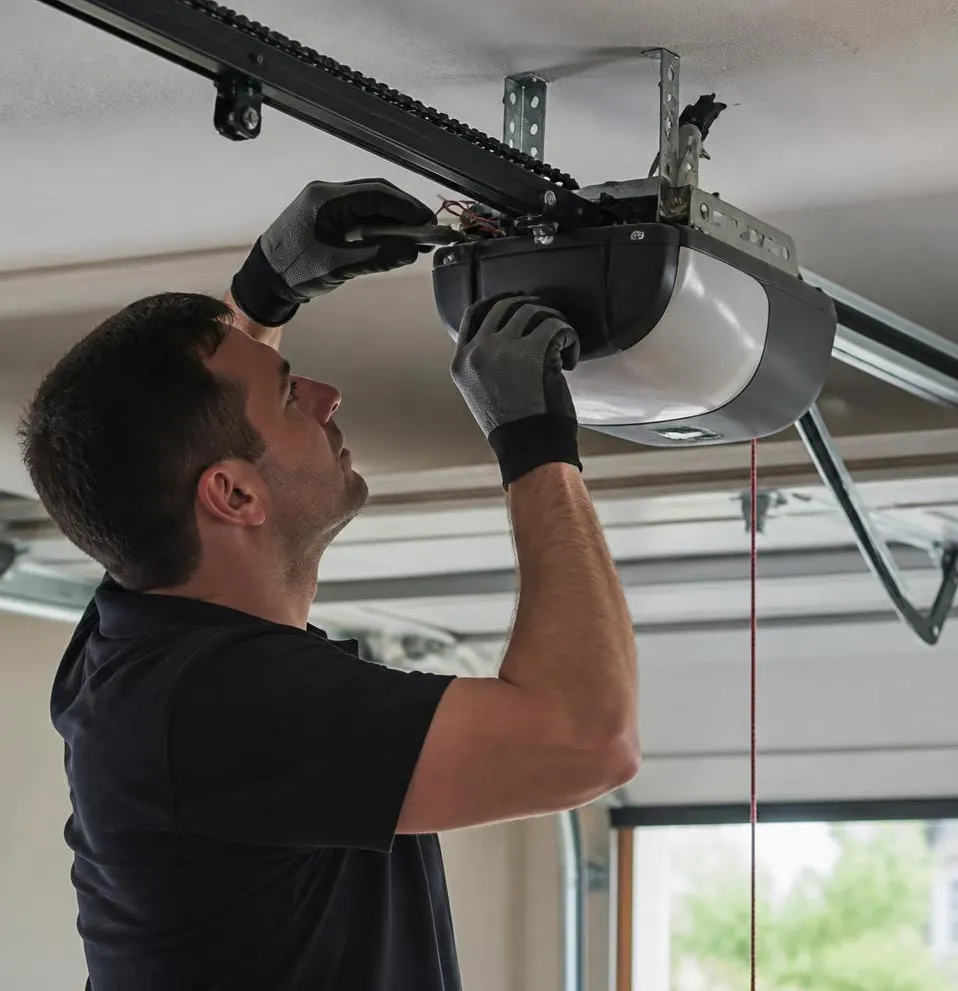
If you're ready to upgrade but aren't sure whether your current track and door can support a smart opener, that's a quick assessment for us. Our Garage Door Opener Services cover installation, compatibility checks, and battery backup setup, so you're not guessing whether a unit will actually work with your existing door. And if the opener swap uncovers worn cables, a tired spring, or a track that's slightly out of alignment, our Cable & Track Repair work gets handled in the same visit instead of becoming a second appointment down the road.
If you're in North East, Elkton, Charlestown, Chesapeake City, Rising Sun, Perryville, Earleville, or Cecilton and you're weighing a smart opener upgrade before winter sets in, give North East Garage Door a call. We'll tell you straight whether your current setup is ready for it — and handle the installation if it is.